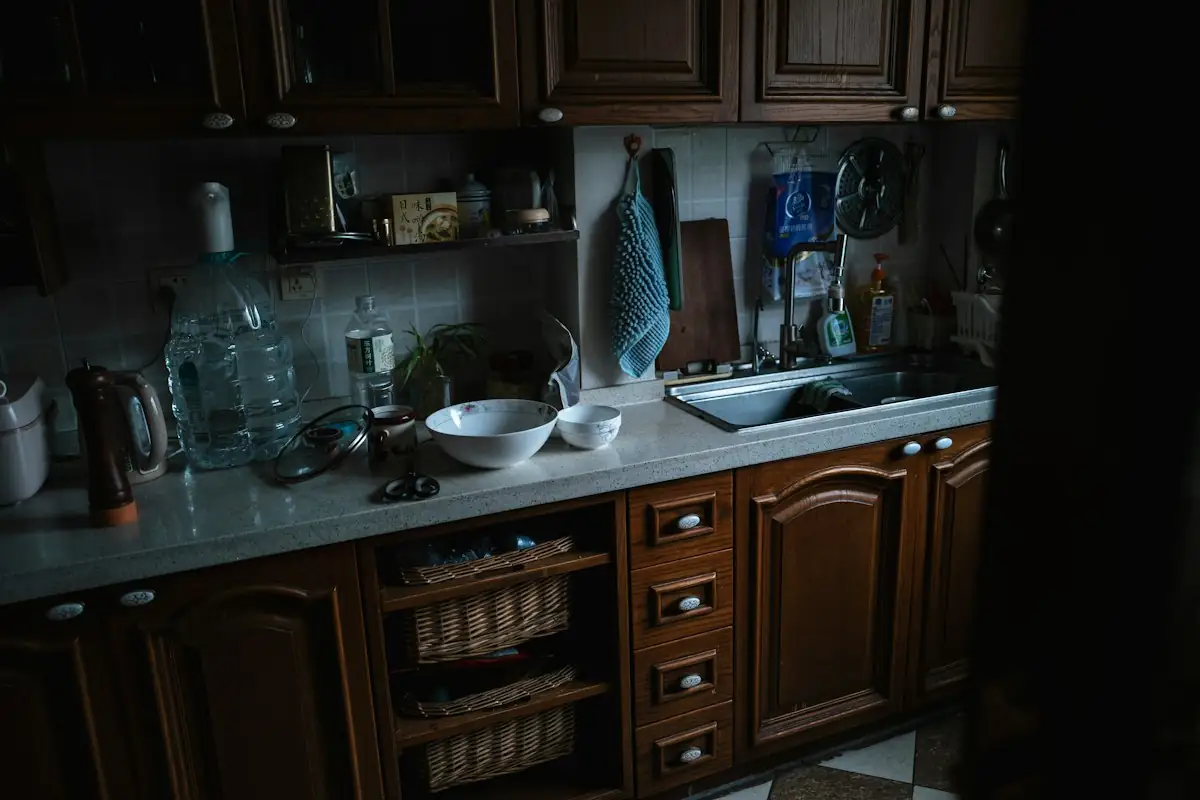
Signs you need garbage disposal installation
- The motor hums but the plate will not spin
- The reset button trips again and again
- Water leaks from the body of the unit rather than a fitting
- Grinding has become loud, rough or slow
- You are renovating the kitchen and want a disposer for the first time
What causes it in Richmond Hill homes
Disposers typically last somewhere around a decade. Internal seals wear out, the grinding chamber corrodes, and eventually the housing cracks and drips onto the cabinet floor. Hard water speeds that wear by leaving scale on the moving parts.
Many kitchens in town were built without disposers, so new installs are common during renovations. One point to remember: York Region runs a green bin program, and food waste that suits the green bin is better kept out of the drain. A disposer is useful for small scraps, not for clearing whole plates.
How the job is done
- We check the sink opening, the drain height and the space beneath the basin.
- Power is confirmed. A disposer needs either a switched receptacle in the sink cabinet or a hardwired connection; if neither exists, an electrician must add one first.
- A bead of putty seals the sink flange, and the motor twists onto its mounting ring.
- The trap is reworked so the outlet falls correctly to the wall drain.
- If a dishwasher is present, its drain hose is connected to the disposer inlet, with the knockout plug removed.
- We run water, grind a few scraps and check every joint for leaks.
What you can do before we arrive
Clear everything out from under the kitchen sink. If an old unit is jammed, switch it off, then try the hex key socket on the underside to free the plate. Do not reach into the chamber with your hand. If you have bought a unit already, leave it in its box so we can confirm the model.
Living with a disposer
Keep the cold tap running while the unit grinds and for a moment afterward, which pushes scraps beyond the trap. Feed food in gradually rather than all at once. Grind a few ice cubes occasionally to scour buildup from the grinding chamber. If the unit jams, switch it off, free the plate with the hex key from below and press the red reset button. Persistent humming without turning usually means a failing motor rather than a jam.
Homes on septic systems need extra thought, since ground food adds solids to the tank. Ask us before installing one in that case.
Worth asking us
Ask what horsepower suits your household. Ask whether a quieter, insulated model is worth it in an open-plan kitchen. If your dishwasher hookup is being changed at the same time, our dishwasher hookup page explains the drain arrangement. Bathroom work on the same visit? See shower valve replacement.
We install across Richmond Hill and in Markham. Scale is part of the story here; the hard-water bulletin goes into the chemistry.
The short version
Tell-tale signs
- Basin still full a minute after you pull the plug
- Tub glugs when the toilet next to it is flushed
- Musty, sour whiff coming up out of the strainer
- Basement grate goes wet whenever the washer empties
Kit on the van
- Push camera and a sonde to find the spot
- Trap pliers, a pail and canvas drop sheets
- Bent-wire hair hook for pop-up stoppers
- Drum auger loaded with quarter-inch cable
How we go about it
- Take off the trap or unscrew the cleanout plug
- Feed cable until it bites, then reel back the plug of muck
- Pour a kettle and a full basin through to prove it runs
- Refit the trap on new washers and wipe the cabinet dry
Your questions, answered plainly
Can any sink take a disposer?
Most standard kitchen sinks with a 3½-inch drain opening can. Very shallow cabinets or unusual sinks may need a compact model.
Do I need an outlet under the sink?
Yes, or a hardwired connection. If no power exists there, an electrician needs to add it first.
Will a disposer cause clogs?
Used sensibly, no. Grease, starches and fibrous scraps are what cause trouble.