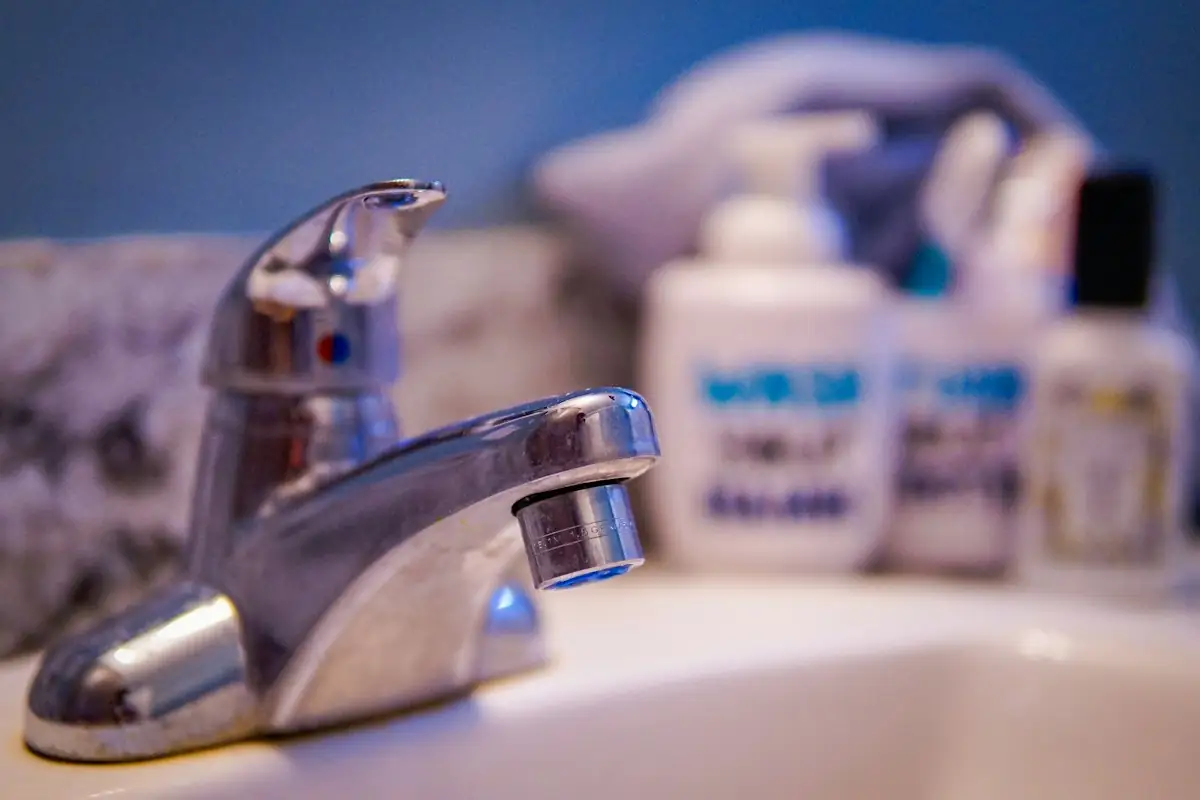
One fixture only
- A clogged aerator or showerhead
- A partly closed stop valve
- A worn cartridge
Hot water only
- Sediment in the water heater
- A failing dip tube or valve at the heater
The whole house
- A partly closed main shut-off
- A failing pressure-reducing valve
- Rusted galvanized pipes
- A damaged service line
- City work in your area
What to try
- Unscrew and clean the aerator.
- Check that all valves are completely open.
- Ask next door whether their pressure is down too.
- Test pressure with a gauge on an outdoor faucet.
Reading a pressure gauge
Screw the gauge onto an outdoor tap with no other water running, open the tap and read the needle. Many homes see readings in the range a regulator is set to; very low or very high readings deserve attention. Note the number and tell us when you call; it shortens diagnosis.
Repeat the test at different times of day; a reading that falls only in the evening points to heavy neighbourhood demand rather than your own pipes.
Related
See repiping, water service line replacement and faucet repair.
Keep-handy checklist
- Close the inside valve for the hose bib before the first frost
- Keep fat in a tin, not down the kitchen sink
- Check the toilet for a silent leak with a few drops of food colouring
- Note where the main cleanout cap is and keep boxes off it
Your questions, answered plainly
Can high pressure be a problem too?
Yes. Very high pressure stresses pipes and fixtures; a reducing valve helps.